
Why it's Mandatory for Businesses to have an AI Operating System in 2026
In 2026, the businesses pulling ahead aren’t the ones with the most software — they’re the ones running on one connected system. Here’s why an AI Operating System beats a stack of disconnected tools.
On this page
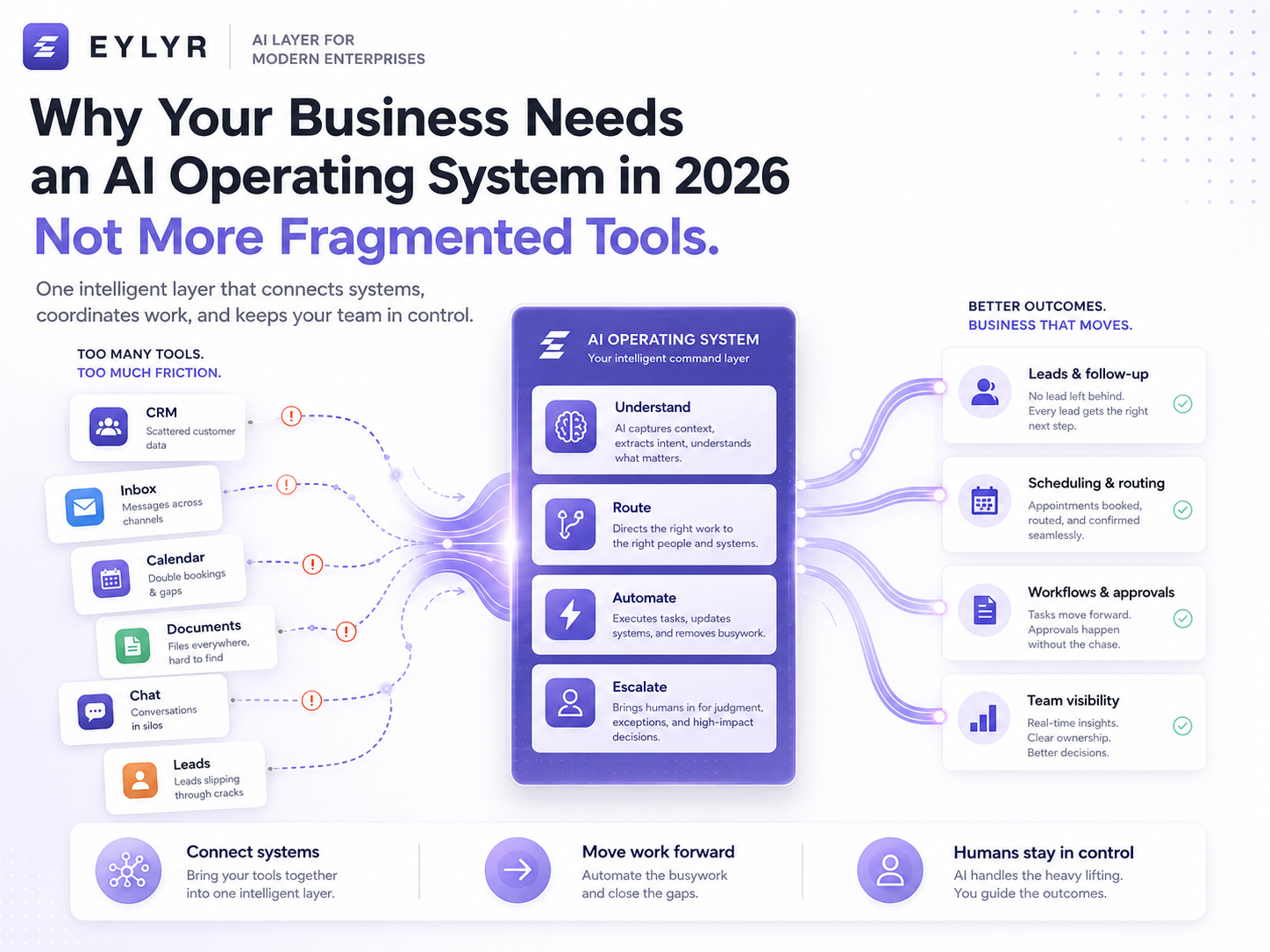
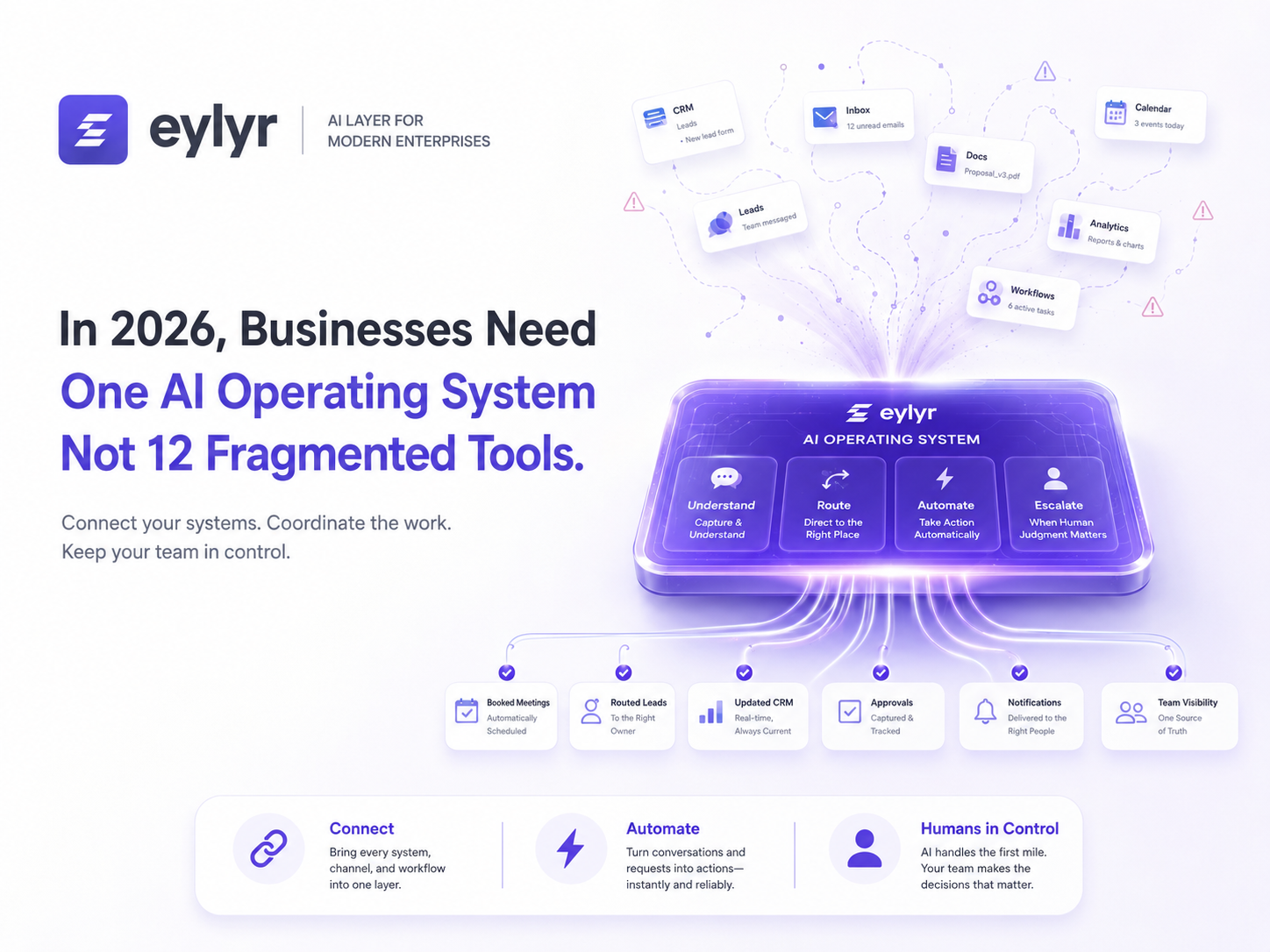
Most businesses in 2026 don’t have a software problem — they have a connection problem. The chat app is fast, the CRM is powerful, the docs are searchable. But the tools don’t talk to each other, so the work of stitching them together quietly falls on your people.
The hidden cost of a fragmented stack
A typical team now runs dozens of separate apps — one for messages, another for documents, another for customer records, another for automations. Each one works. Together, they leak time. Information gets copied by hand, context lives in someone’s head, and no single place shows what’s actually happening across the business.
- Data re-entered by hand between tools that should share it
- Leads and messages that slip through the cracks between apps
- Reports stitched together manually from five different dashboards
- New hires who need weeks just to learn where everything lives
- No single source of truth for what’s happening right now
Key Insight
Adding another point tool rarely fixes fragmentation — it usually deepens it. The fix isn’t more software. It’s a layer that connects the software you already have.
What an AI Operating System actually is
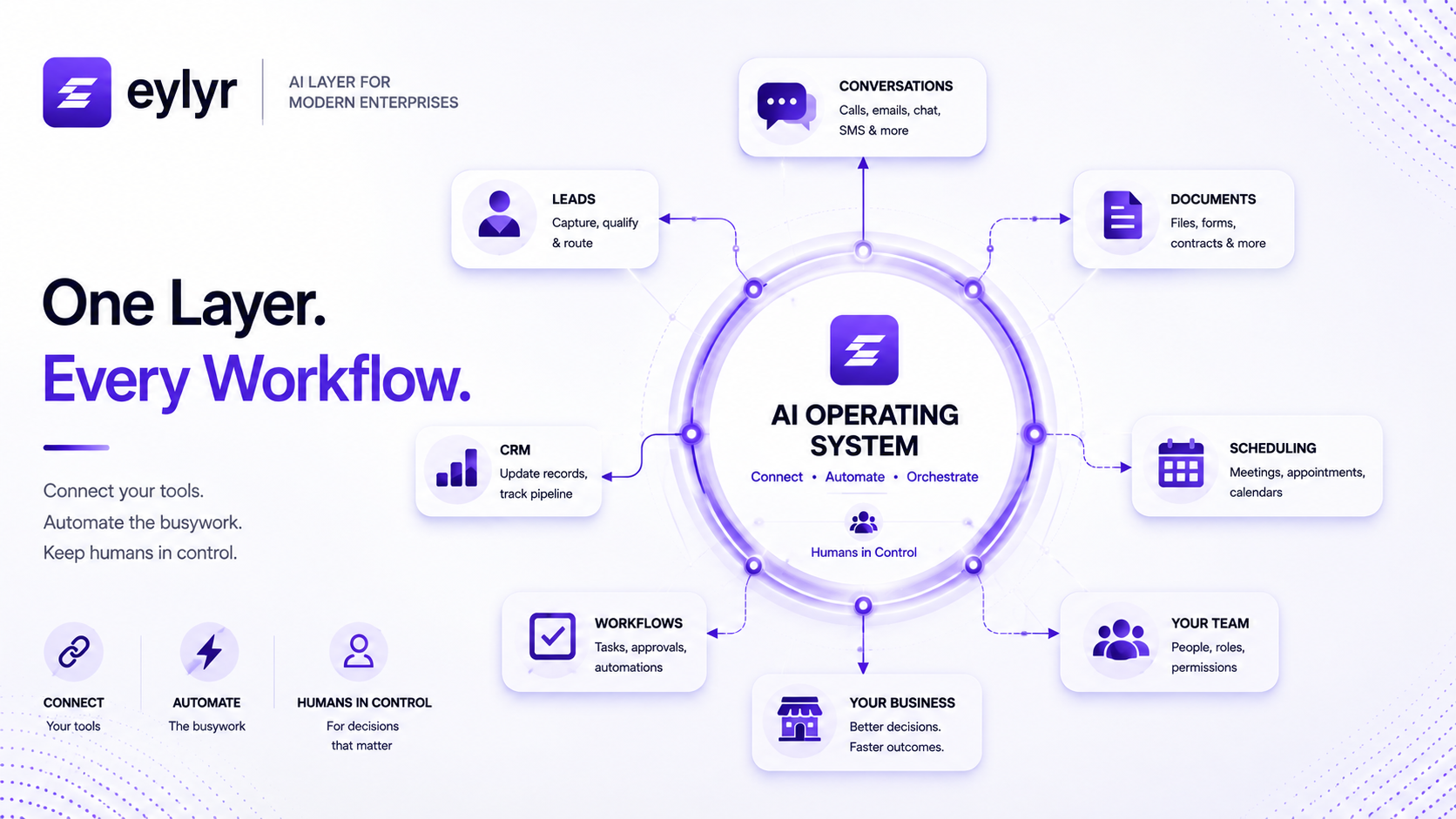
An AI Operating System is the connective layer that sits on top of your existing tools and turns them into one intelligent system. Instead of a person copying information between apps, the system moves it — capturing leads, routing communications, updating records, and drafting documents — while your team stays in control and approves the important steps. Curious what that looks like for your operation? See where it could connect your business.
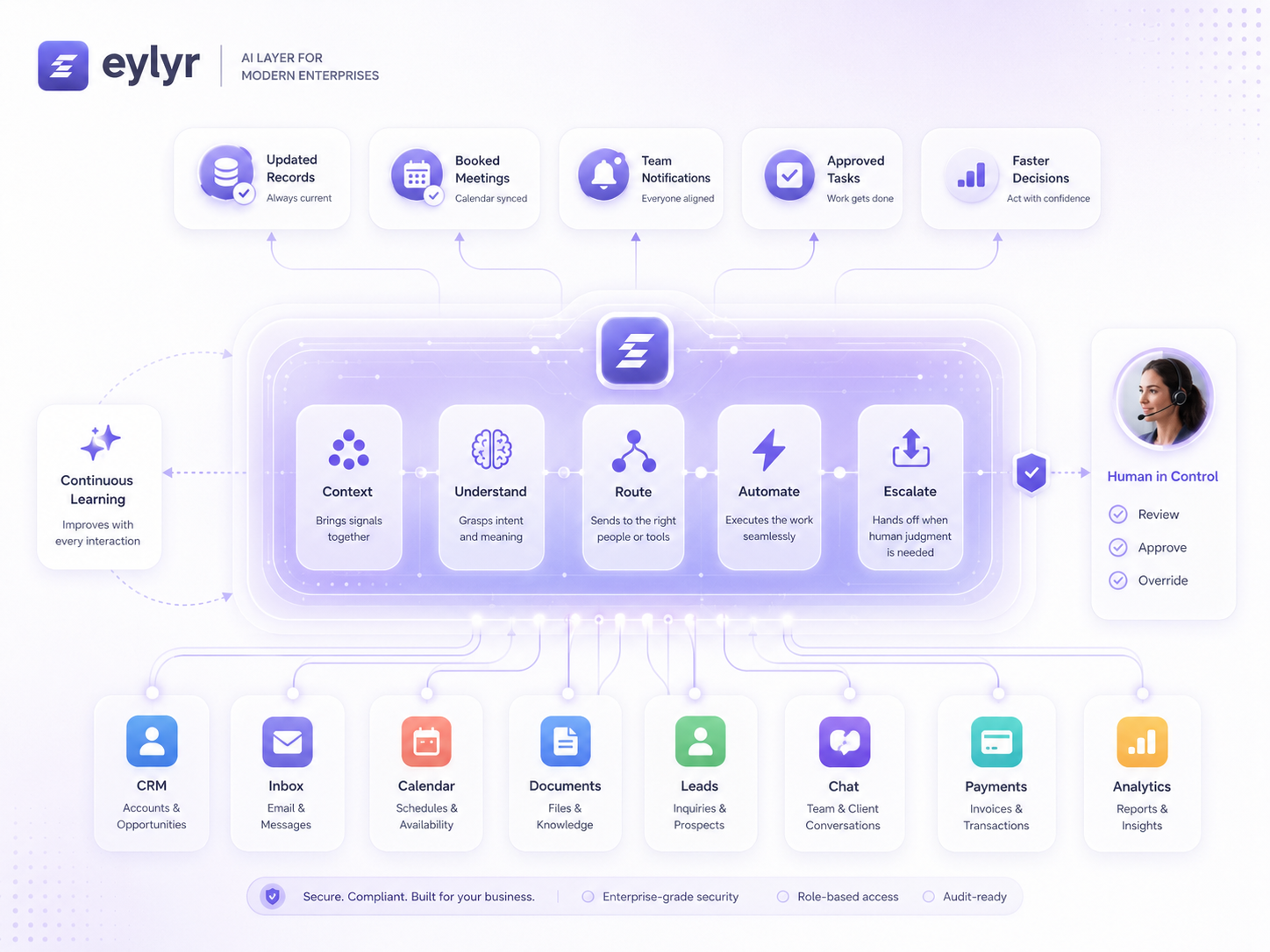
It is not a rip-and-replace. Your CRM stays your CRM. Your chat stays your chat. The operating system connects them so the whole thing runs as one.
A pile of point tools vs. one operating system
| A stack of disconnected tools | An AI Operating System |
|---|---|
| Context scattered across Slack, Notion, and email | One connected source of truth |
| Customer records split between Salesforce and HubSpot | A unified view of every customer |
| Automations bolted on with Zapier that break when one app changes | Workflows that adapt — with humans approving |
| AI assistants from OpenAI, Anthropic, and Google used in isolated tabs | AI that acts across your whole operation |
| Work spread across Microsoft 365 and Google Workspace | Every tool working as one system |
Five reasons 2026 is the year this becomes essential
- AI finally acts, not just chats. Assistants from OpenAI, Anthropic, and Google can now take real actions — but only when they’re connected to your tools and data.
- Customers expect instant, consistent follow-up. Fragmented tools create gaps; a connected system closes them.
- Teams are leaner. The manual glue work between apps is exactly what should be automated first.
- Tool sprawl has peaked. Most businesses already own everything they need — they just aren’t connected.
- Your competitors are consolidating. The fastest-moving businesses run on one system, not twenty tabs.
Humans in control
An AI Operating System doesn’t replace your team or run unsupervised. Every important action is approved by a person. The system removes the busywork; your people keep the judgment.
You connect your tools — you don’t replace them
Whether you run Slack or Microsoft Teams, Notion or Google Workspace, Salesforce or HubSpot, the point of an AI Operating System isn’t to throw them out. It’s to make them work as one — so leads, communications, documents, workflows, data, and people finally share the same brain.
That’s what EYLYR builds: custom AI Operating Systems for businesses. We map where your work fragments today, connect the tools you already use, and put an intelligent layer on top — with your people in control. Get in touch and we’ll show you where to start.
We’ll map where your work fragments today and where an AI Operating System could connect it — with your people in control.
Book a strategy sessionIn 2026, the advantage isn’t having more tools. It’s having one system that makes all of them work together.