
What Is an AI Operating System?
An AI Operating System connects the tools, communications, and workflows a business already uses into one intelligent layer — with people in control. Here's what that means, and how it differs from buying another app.
On this page
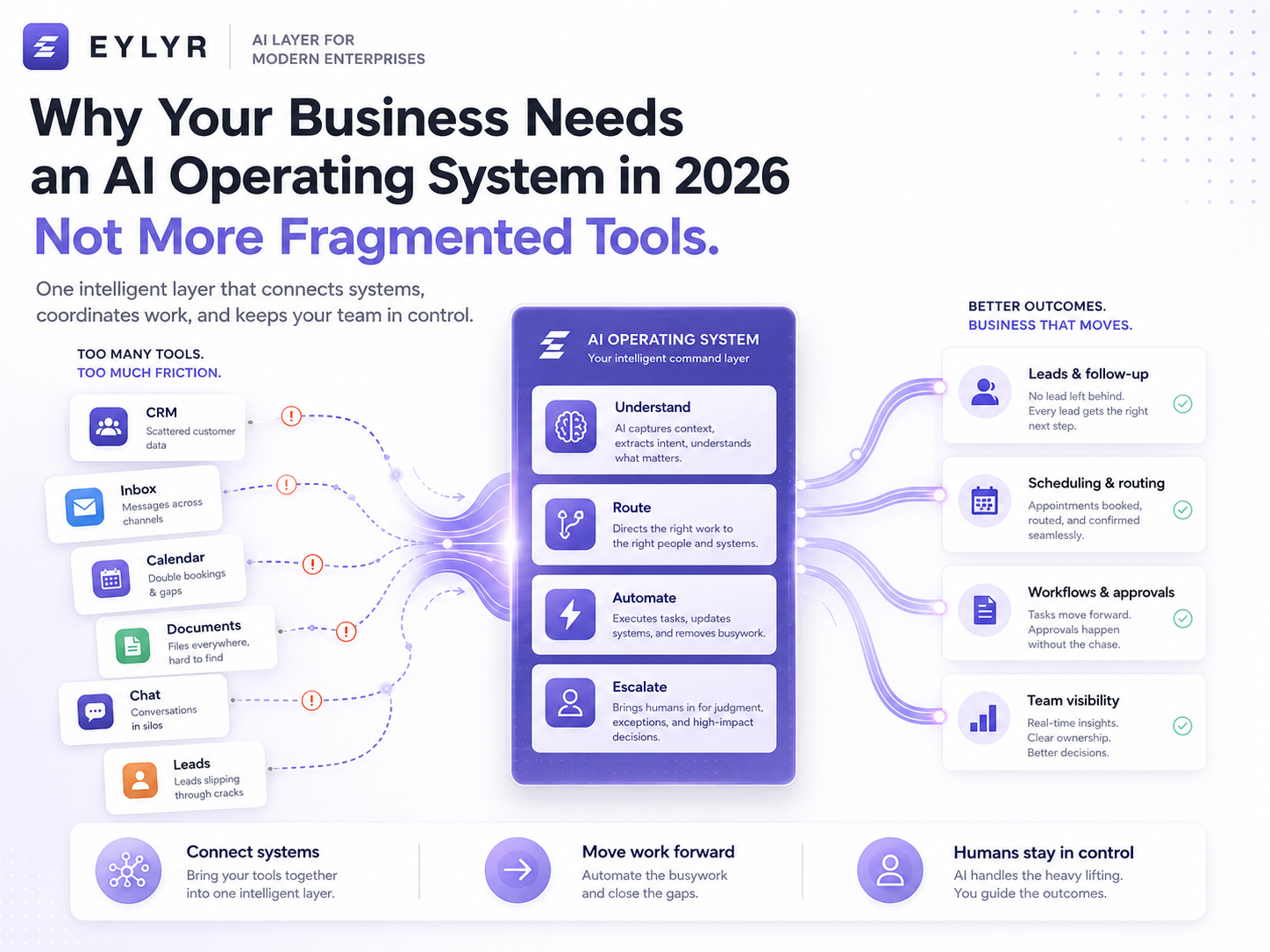
Most businesses don't have an AI problem. They have a coordination problem. Leads arrive in one place, conversations happen in another, documents live somewhere else, and the people doing the work spend their days stitching it all together by hand.
An AI Operating System is a way to close those gaps — a connected layer that sits across the tools a business already uses and helps the work move, with people still in control of the decisions that matter.
The problem: fragmented operations
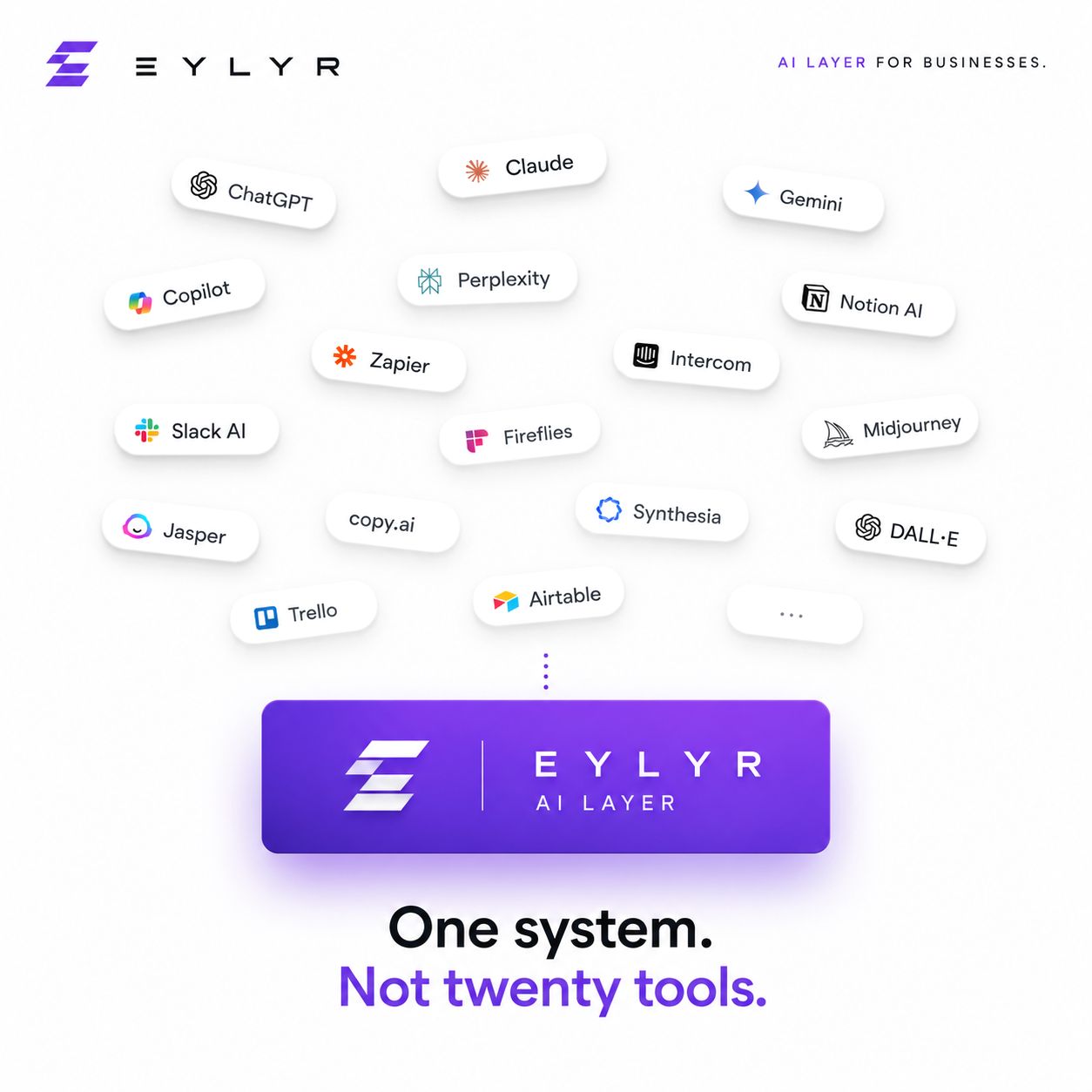
As a company grows, it accumulates software. A CRM here, a phone system there, a shared drive, a scheduling tool, a handful of inboxes. Each tool is fine on its own. The pain lives between them:
- Leads wait because no one saw the message in time.
- The same information gets re-entered into three systems.
- Follow-ups slip because they depend on someone remembering.
- No one has a single, current picture of what's actually happening.
None of these are tool problems. They're connection problems — and adding another standalone app usually makes the fragmentation worse.
What an AI Operating System actually is
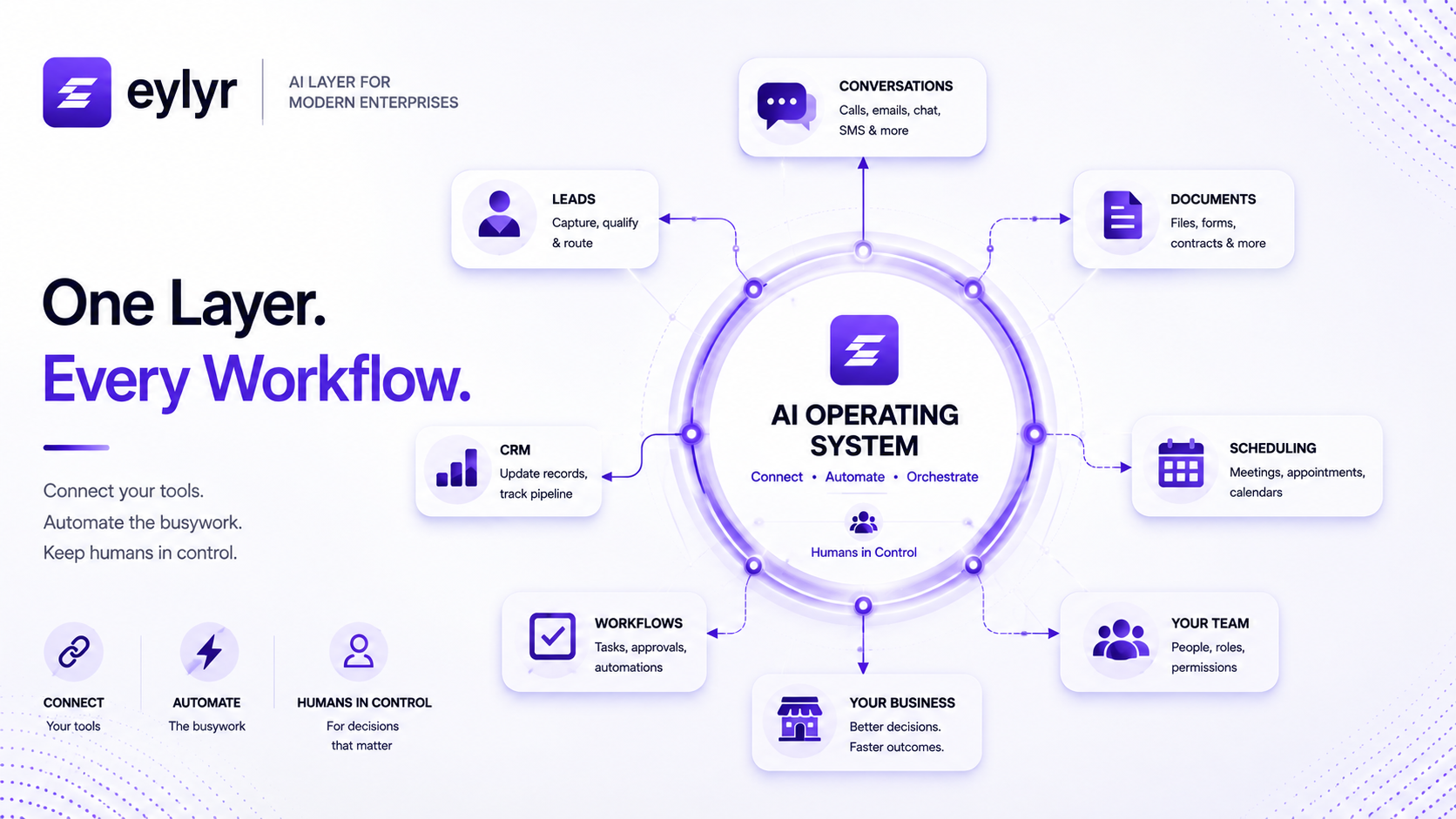
An AI Operating System is not one more app in the stack. It's the layer that connects the stack. Three things make it work. <h1> Test <h1>
A connective layer
It links the systems you already run — communications, documents, CRM, scheduling, tasks — so information flows between them instead of being copied by hand. The goal isn't to replace your tools; it's to make them behave like one system.
Specialized agents and automation
On top of that layer, focused AI agents and automations handle the repeatable work: capturing an enquiry, qualifying and routing it, drafting a follow-up, updating records, surfacing what needs attention. Each agent does a specific job well, rather than one model trying to do everything.
Humans in control
The parts that require judgment stay with people. A well-designed system automates the busywork and then hands off — for review, approval, or escalation — wherever a human decision belongs.
Key Insight
The point of an AI Operating System isn't autonomy for its own sake. It's leverage: fewer things falling through the cracks, and more of your team's time spent on work only people can do.
AI Operating System vs. traditional software
Traditional software gives you a place to store information and a set of screens to manage it. You still supply most of the movement — opening the app, reading the update, deciding what happens next, and doing it in the next tool.
| Traditional software | AI Operating System | |
|---|---|---|
| Where information lives | In each tool, separately | Connected across tools |
| Who moves the work | People, by hand | The system, with human review |
| Best at | Storing & displaying | Coordinating & acting |
An AI Operating System adds the movement. It connects those tools and carries work between them, so fewer steps depend on someone manually shuttling information around.
AI Operating System vs. point AI tools
A point AI tool solves one slice — a chatbot, a transcription tool, an email drafter. Useful, but each one is another island unless something connects it to the rest of your operation.
An AI Operating System is the connective tissue. The individual capabilities matter less than how well they're wired into the actual workflow, the real handoffs, and the systems of record you already trust.
Where to start
You don't adopt an AI Operating System by buying a box. You start from how your operation really runs:
- Map where work fragments today — the handoffs and the waiting.
- Connect the highest-friction systems first.
- Automate the repeatable steps around them, with clear human review points.
- Expand from there, keeping people in control at each stage.
Best practice
Start with the single highest-friction handoff in your operation. Connecting one painful gap well beats automating ten things poorly.
That's the approach behind EYLYR: a custom AI Operating System designed around your business, not a template — connecting leads, communications, documents, workflows, data, and people into one system, with humans in control. Book a call to get started today!