
AI Agents vs SaaS: What Businesses Need to Know in 2026
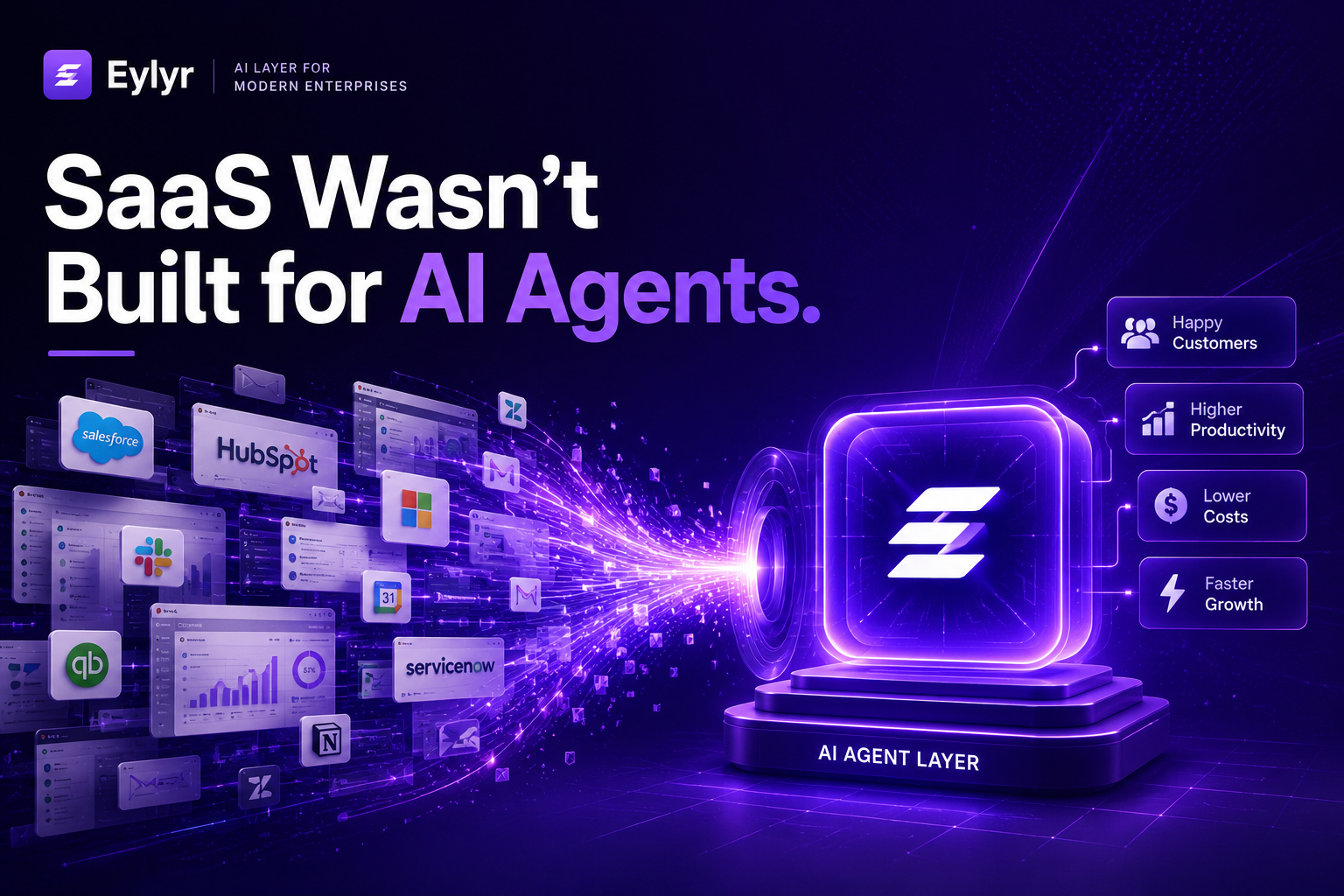
AI agents are changing the way businesses think about SaaS. From Salesforce and Microsoft to ServiceNow and SAP, major platforms are moving beyond software that employees operate toward systems that can understand, coordinate, and execute workflows.
On this page
- The Problem Isn't a Lack of Software
- The Human Coordination Tax
- AI Agents Are Changing What Software Does
- Salesforce Agentforce Is a Good Example
- ServiceNow Is Taking a Similar Direction
- Microsoft, Google, SAP and Oracle Are Moving Too
- So, Are AI Agents Killing SaaS?
- The Old Model
- The Emerging Model
- Why This Matters to Your Business
- Look at Your Business Through These Questions
- The SaaS Companies Aren't Going Away. The Way We Use Them Is Changing.
- The New Problem: AI Sprawl
- More AI Tools Don't Automatically Mean More AI Transformation
- This Is Where an AI Operating Layer Becomes Interesting
- What Should You Automate First?
- The Real Shift Is From Applications to Outcomes
- The Future Isn't Human vs AI
- Where Eylyr Fits Into This Shift
- The Question to Ask Your Business
- The Next Era of Enterprise Software
- Start With One Workflow
If you run a business today, you probably have more software than you had five years ago.
You have a CRM. An email platform. Project management software. Accounting software. Customer support. Scheduling. Analytics. Maybe a dozen more tools that someone on your team insisted were “essential.”
And yet, your employees are still copying information from one system to another.
• They're still following up with leads manually.
• They're still checking inboxes.
• They're still updating CRMs.
• They're still reminding each other to do things.
So here's the uncomfortable question:
If we're surrounded by software, why are humans still doing so much of the work?
That is where AI agents change the conversation.
The Problem Isn't a Lack of Software
For the last twenty years, businesses have solved operational problems by buying another application.
• Need a CRM? Buy Salesforce.
• Need marketing automation? Add HubSpot.
• Need customer support? Add Zendesk.
• Need IT workflows? Add ServiceNow.
• Need HR and finance? Look at Workday, SAP or Oracle.
• Need collaboration? Add Microsoft 365 or Slack.
Every application solves a real problem.
But there's a problem hiding underneath all of them.
Your business doesn't actually operate inside separate applications.
Your business operates through workflows that cross applications.
A lead might start on your website, enter your CRM, trigger an email, get researched through another platform, create a calendar event and eventually become a customer.
The software exists.
The connections between the software are where the work happens.
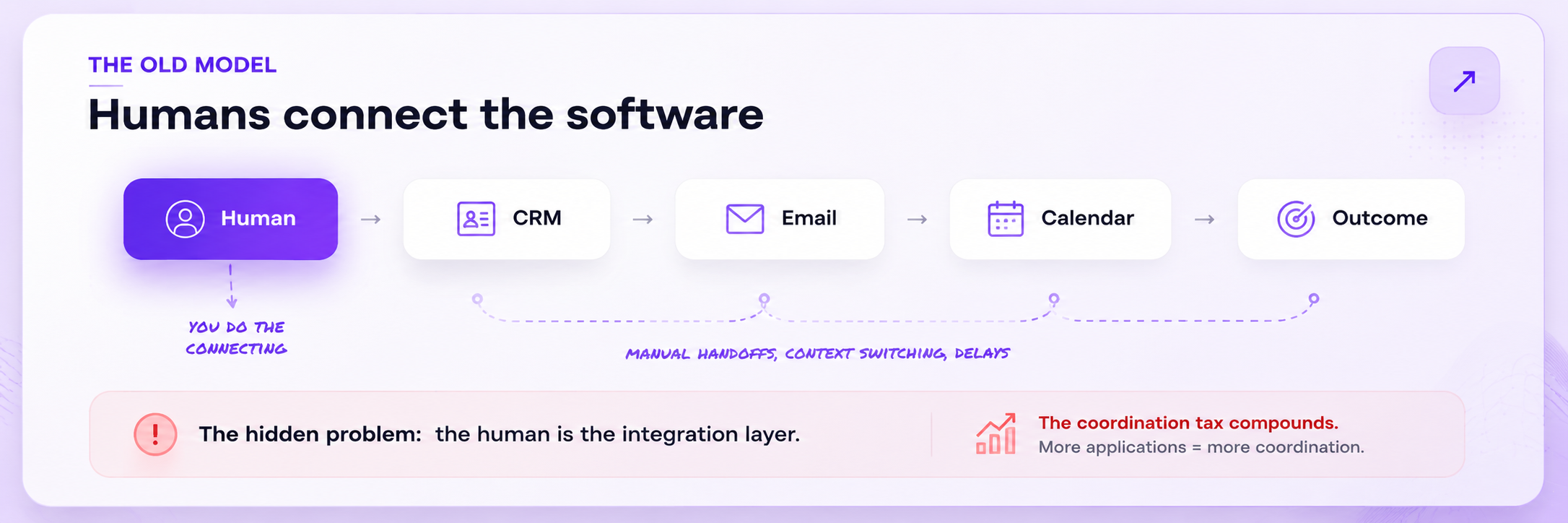
And very often, the human is the connection.
The Human Coordination Tax
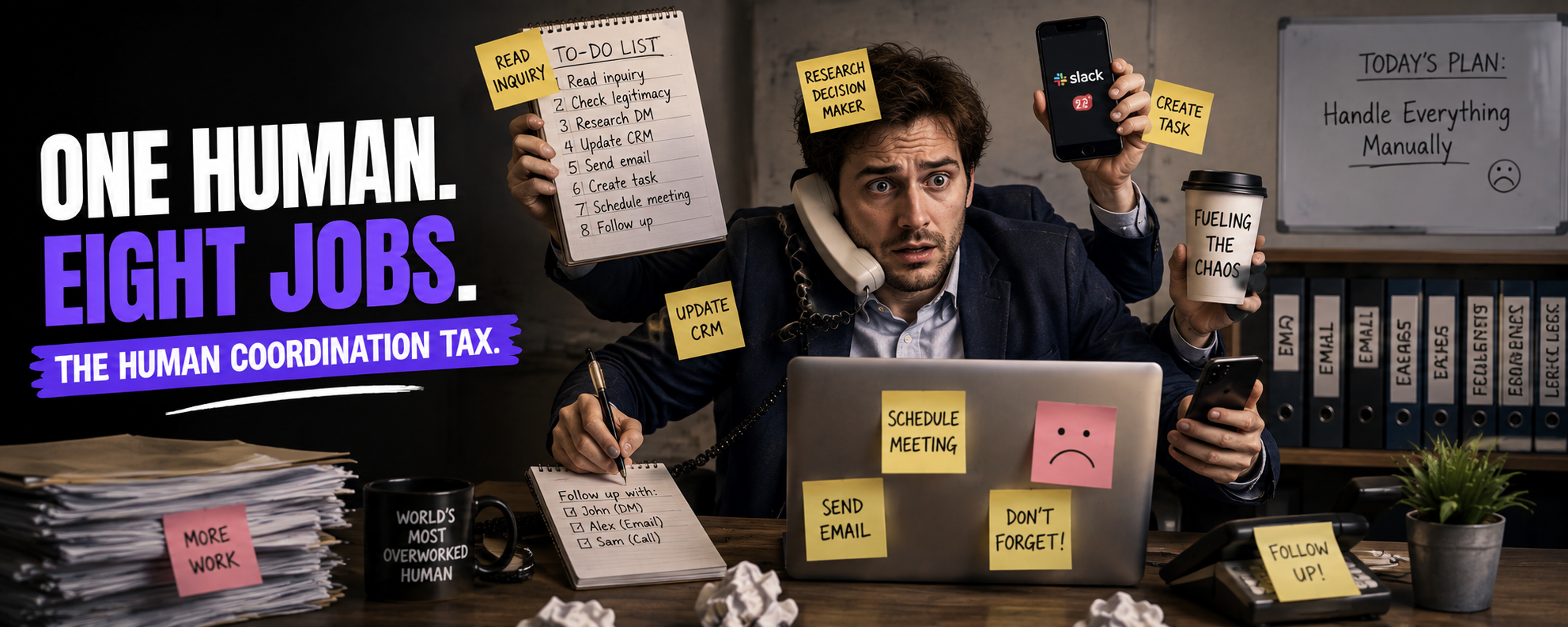
Think about what happens when a new prospect enters your business.
1. Someone reads the inquiry.
2. Someone checks whether the company is legitimate.
3. Someone researches the decision-maker.
4. Someone updates Salesforce or HubSpot.
5. Someone sends an email.
6. Someone creates a task.
7. Someone schedules a meeting.
8. Someone remembers to follow up.
None of these tasks are particularly difficult.
But multiply them by hundreds or thousands of customers and prospects, and you've built an entire layer of operational work.
Key Insight
The biggest cost in modern businesses isn't always the software. It's the human coordination required to make all the software work together.
AI Agents Are Changing What Software Does
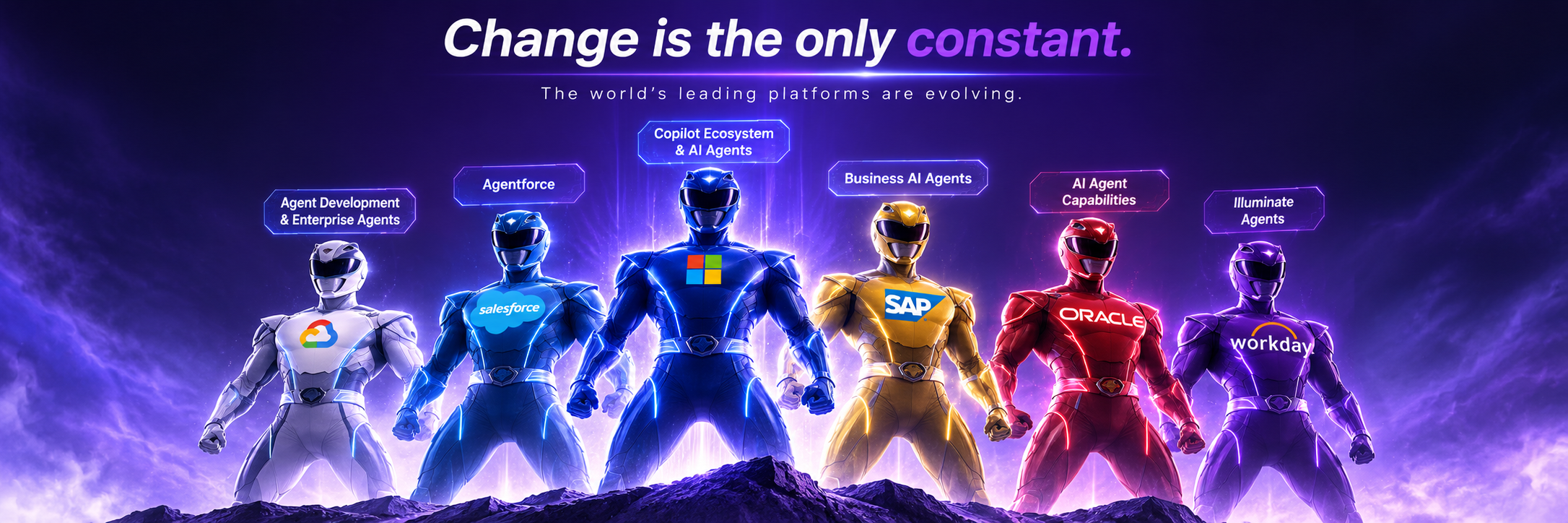
You've probably heard every major technology company talking about AI agents.
• Salesforce has Agentforce.
• Microsoft has Copilot and Copilot Studio.
• ServiceNow is building AI agents into its enterprise workflow platform.
• Google Cloud is building agent development and orchestration capabilities.
• SAP is developing Joule Agents.
• Oracle has AI Agent Studio.
• Workday is developing Illuminate Agents.
This isn't a small feature race.
The biggest enterprise software companies are effectively betting that the next generation of software won't simply show employees information.
It will increasingly act on their behalf.
Salesforce Agentforce Is a Good Example
Take Salesforce.
For years, Salesforce was primarily the place where sales teams stored customer information, managed opportunities and tracked pipelines.
Now Salesforce is positioning Agentforce as an agent-driven layer that can work with employees, customers and business data, with agents capable of taking actions across workflows. Salesforce also highlights connections through Flows, MuleSoft APIs and custom code.
That distinction matters.
Salesforce isn't saying:
“Here's another chatbot.”
It's saying:
“What if the system could actually perform part of the job?”
ServiceNow Is Taking a Similar Direction
ServiceNow is approaching the opportunity from a different angle.
Its platform has historically been built around workflows across IT, HR, security, customer service and other enterprise functions.
Now ServiceNow is positioning its AI platform as a layer that connects AI agents to workflows, systems of record, data and integrations across the enterprise.
That tells you something important.
The battle isn't simply about who has the smartest model.
It's increasingly about who controls the workflow layer.
Microsoft, Google, SAP and Oracle Are Moving Too
• Microsoft is pushing AI agents through its broader Copilot ecosystem and agent-building infrastructure.
• Google Cloud is developing tools for building and managing enterprise agents.
• SAP is adding agents to its business applications.
• Oracle is building AI agent capabilities into its enterprise ecosystem.
And Workday is taking the same direction with AI agents for HR and finance workflows.
Deloitte's 2026 analysis specifically identifies Salesforce Agentforce, SAP Joule Agents, ServiceNow AI Agents and Workday Illuminate Agents as examples of major SaaS companies adding agentic capabilities to existing products.
So this isn't really a question of whether AI agents are coming.
They're already being built into the software businesses use every day.
So, Are AI Agents Killing SaaS?
Not exactly.
And this is where the headline gets interesting.
AI agents probably aren't going to make Salesforce, Microsoft, ServiceNow, SAP or Oracle disappear.
In fact, these companies are adapting their products precisely because they understand where the market is heading.
The bigger change is this:
Humans may no longer be the primary operators of SaaS.
That's a much more interesting possibility.
The Old Model
The Emerging Model
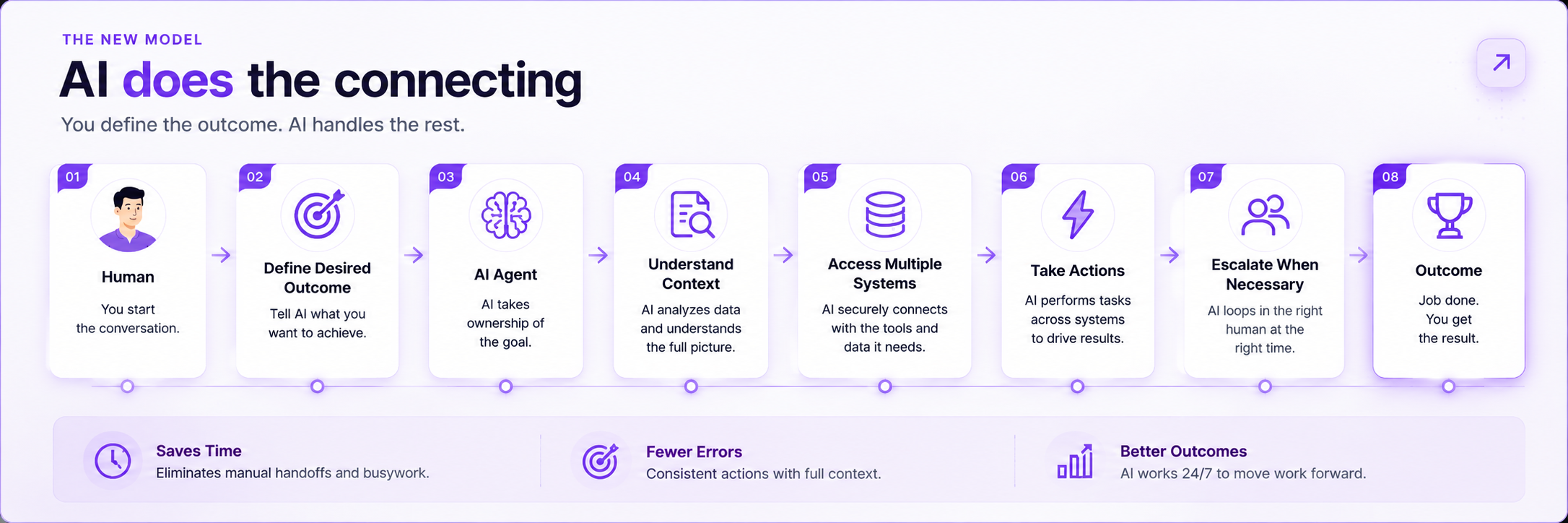
The applications don't necessarily disappear.
The manual coordination between them starts disappearing.
Why This Matters to Your Business
This isn't really about having the latest AI technology.
It's about what happens to your operating costs when software starts doing work instead of simply helping employees do work.
1. Imagine your sales team no longer having to manually research every prospect.
2. Imagine your customer support system identifying an issue, finding the customer's history, determining the next action and resolving the request without someone moving between five applications.
3. Imagine your finance team asking for a report instead of spending half a day assembling it.
4. Imagine your operations team describing an outcome and having an AI agent coordinate the systems required to achieve it.
That's the real promise.
Look at Your Business Through These Questions
- Where are employees copying information between systems?
- Where are people constantly switching between applications?
- Where do leads wait for someone to respond?
- Where are follow-ups forgotten?
- Where are documents manually reviewed?
- Where are repetitive reports created?
- Where do employees spend time checking whether someone else completed a task?
- Where does the same workflow happen hundreds of times every month?
Those are the workflows worth looking at first.
Not because every human task should disappear.
But because repetitive coordination is exactly where AI agents can create leverage.
The SaaS Companies Aren't Going Away. The Way We Use Them Is Changing.
This is probably the most important distinction.
Your company may still use Salesforce.
You may still use HubSpot.
You may still use Microsoft365.
You may still use ServiceNow.
You may still use SAP or Oracle.
But the employee might not interact with each system manually for every single action.
Instead, an AI layer could increasingly sit between the employee and the applications.
| Traditional SaaS Model | Agentic Enterprise Model |
|---|---|
| Employee opens the application | Employee gives the agent an objective |
| Employee searches for information | Agent retrieves relevant information |
| Employee enters data | Agent updates systems |
| Employee creates tasks | Agent triggers workflows |
| Employee monitors dashboards | Agent surfaces what matters |
| Employee coordinates applications | Agent coordinates applications |
| Software helps the employee | Software increasingly performs the work |
This is why the conversation around AI and SaaS has become so important.
Recent market pressure around companies such as Salesforce, ServiceNow and Workday reflects investor concerns about whether AI could disrupt traditional software economics.
At the same time, ServiceNow and Salesforce continue reporting strong demand and expanding their own AI offerings.
The story isn't simply “SaaS is dead.”
It's SaaS is being forced to evolve.
The New Problem: AI Sprawl
There's another trap businesses need to avoid.
The AI boom makes it incredibly easy to buy more tools.
One AI tool for sales.
One for content.
One for customer support.
One for meetings.
One for research.
One for recruitment.
One for automation.
And suddenly you've created the same problem you had with SaaS.
Too many disconnected systems.
More AI Tools Don't Automatically Mean More AI Transformation
You can have twenty AI tools and still have a completely manual business.
Because the real question isn't:
“How many AI tools are we using?”
It's:
“How much work is the system actually completing for us?”
Key Insight
The goal isn't more AI. The goal is less manual work.
This Is Where an AI Operating Layer Becomes Interesting
An AI operating layer isn't necessarily another application that asks employees to create another login.
It sits across the systems a business already depends on.
It connects the information.
It understands the workflow.
It determines what needs to happen next.
And, within defined permissions, it can execute the action.
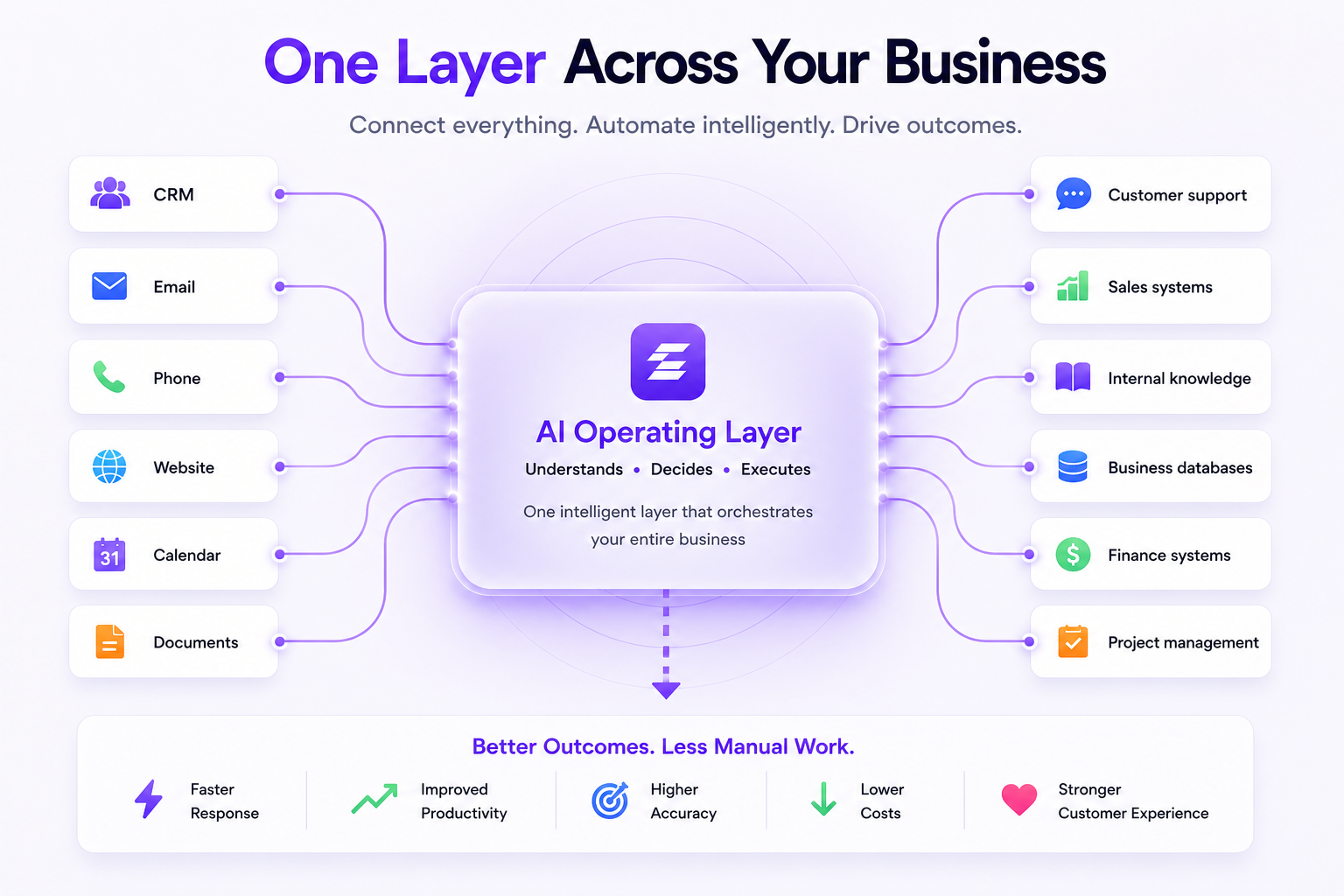
Instead of asking your employees to constantly move between these systems, the AI layer becomes the connective tissue between them.
That is a fundamentally different approach to automation.
What Should You Automate First?
You don't need to rebuild your entire company around AI tomorrow.
Start with one workflow.
The best candidate is usually something that is repetitive, crosses multiple systems and consumes a meaningful amount of employee time.
- Identify one repetitive workflow.
- Map every step from input to outcome.
- Identify where humans are simply moving or organising information.
- Connect the systems required to complete the workflow.
- Give AI controlled access to those systems.
- Keep humans involved where judgment, approval or accountability is required.
- Measure the actual business outcome.
The goal isn't to automate everything.
It's to remove the work that never needed a human in the first place.
The Real Shift Is From Applications to Outcomes
For decades, businesses bought software based on features.
Does it have CRM?
Does it have reporting?
Does it have automation?
Does it integrate with our other tools?
But AI agents introduce a different question:
What can this system actually accomplish for us?
That's a much bigger question.
And it could eventually change how businesses evaluate software, how vendors price it and how employees interact with it.
Deloitte expects agentic AI to put pressure on traditional SaaS models and drive more experimentation around how AI-enabled software is delivered and monetised.
The Future Isn't Human vs AI
The future isn't a world where businesses choose between humans and machines.
It's a world where humans decide what should happen, while intelligent systems increasingly handle how the work gets done.
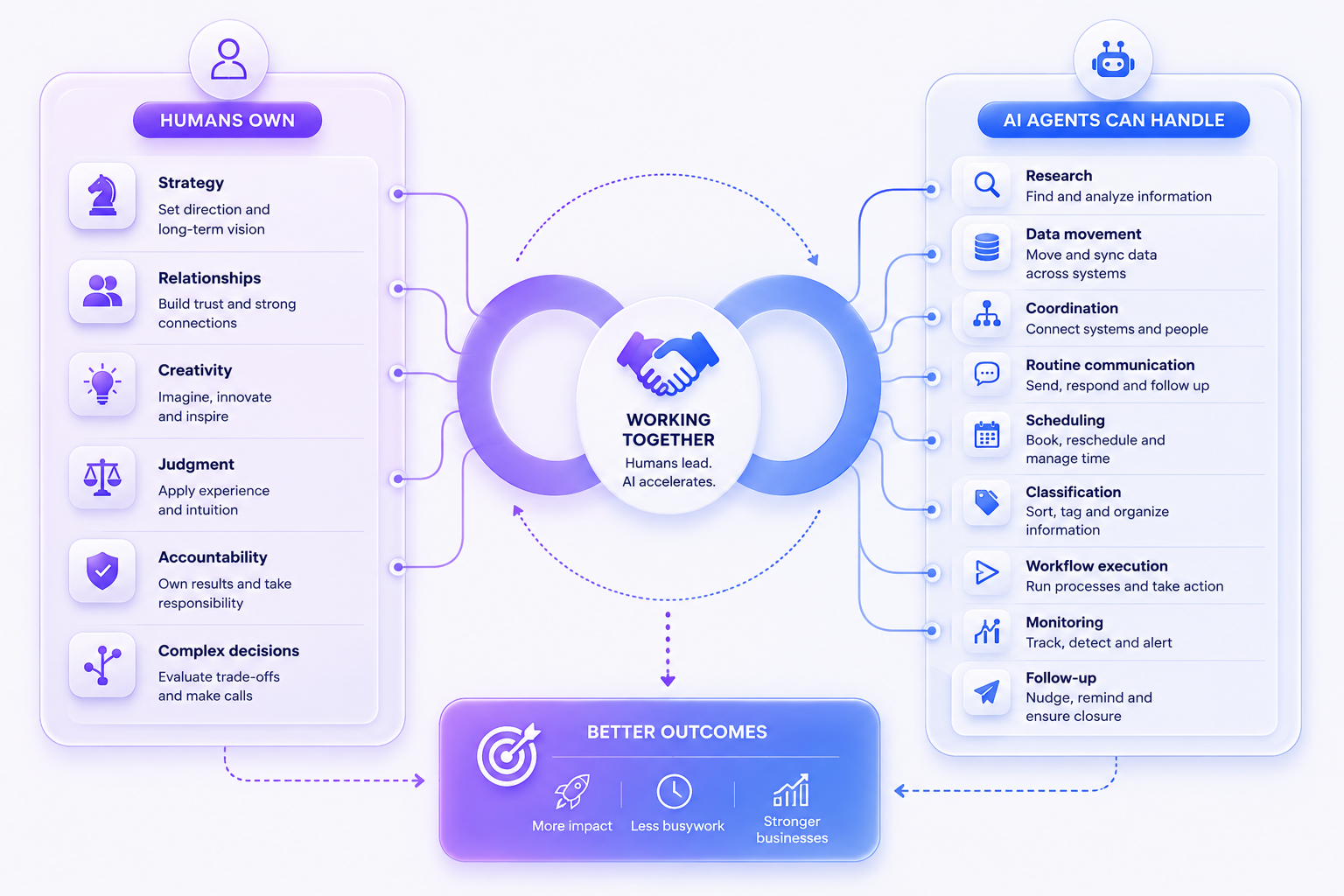
Key Insight
The winning companies won't necessarily be the ones that replace the most employees.
They may be the ones that remove the most unnecessary work from every employee.
Where Eylyr Fits Into This Shift
This is the market Eylyr is building for.
The idea isn't to create another isolated AI application that adds one more dashboard to your business.
It's to create an AI layer for modern enterprises.
A layer that can sit across the systems a business already uses and connect customer acquisition, client management and operational workflows.
Don't replace every system. Make your systems intelligent.
That's the fundamental difference.
You don't necessarily need to rip out Salesforce.
You don't necessarily need to abandon HubSpot.
You don't need to replace Microsoft, ServiceNow or every other platform your business depends on.
The opportunity is to make the existing infrastructure work together through an intelligent operating layer.
The Question to Ask Your Business
Don't start by asking:
“What AI tool should we buy?”
Start with:
“What process are our people still doing manually that software should be doing?”
Then find the workflow.
Map it.
Connect it.
Automate it.
Measure the result.
Do that repeatedly, and you aren't simply adding AI to your company.
You're changing how your company operates.
The Next Era of Enterprise Software
AI agents aren't necessarily killing SaaS.
They're changing what we expect SaaS to do.
Salesforce is building Agentforce.
Microsoft is building an agent ecosystem around Copilot.
ServiceNow is building AI into enterprise workflows.
Google Cloud is building agent infrastructure.
SAP and Oracle are embedding agents into business software.
The direction is clear: the major software companies aren't waiting for the agentic era.
They're building for it.
The real question now isn't whether businesses will use AI agents.
It's who will build an operating model around them first.
Because the competitive advantage won't come from having the most AI tools.
It will come from having the least manual business.
Start With One Workflow
Pick the process that wastes the most time.
The one everyone hates.
The one that involves five different applications.
The one that requires someone to constantly check, copy, paste, update and follow up.
Then ask one question:
“What if an AI agent handled this from beginning to end?”
That is where your AI transformation should start.
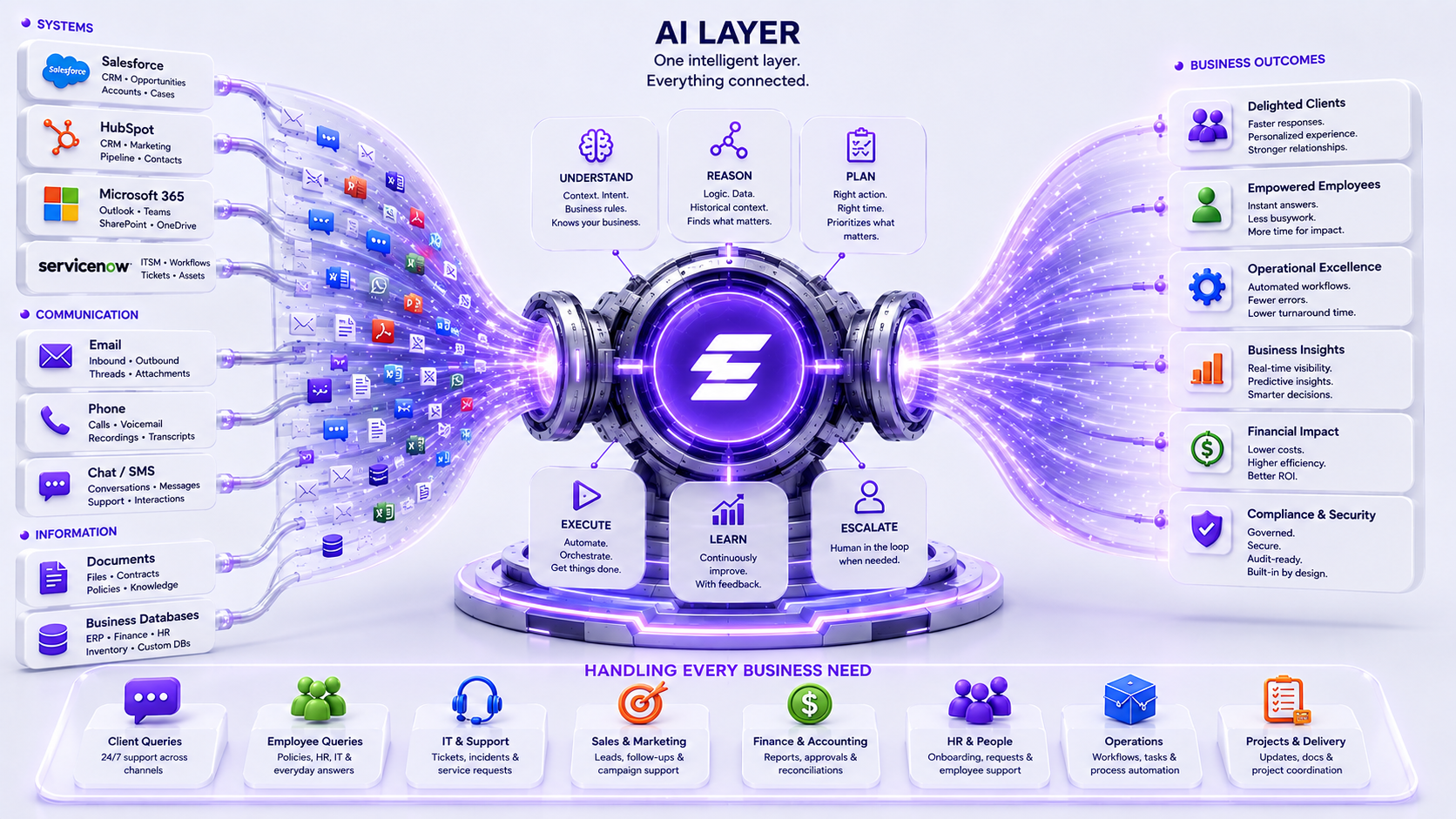
The future of enterprise software isn't necessarily fewer applications. It's fewer humans having to manually coordinate them. And that shift is already underway.
Build Your AI Operating Layer